Does Europe actually cost your players starts?
I matched every European tie English clubs have played since 2022/23 to the league game straight after it. The knockouts cost starts but hardly any points, and the real cost is spread across the whole season.
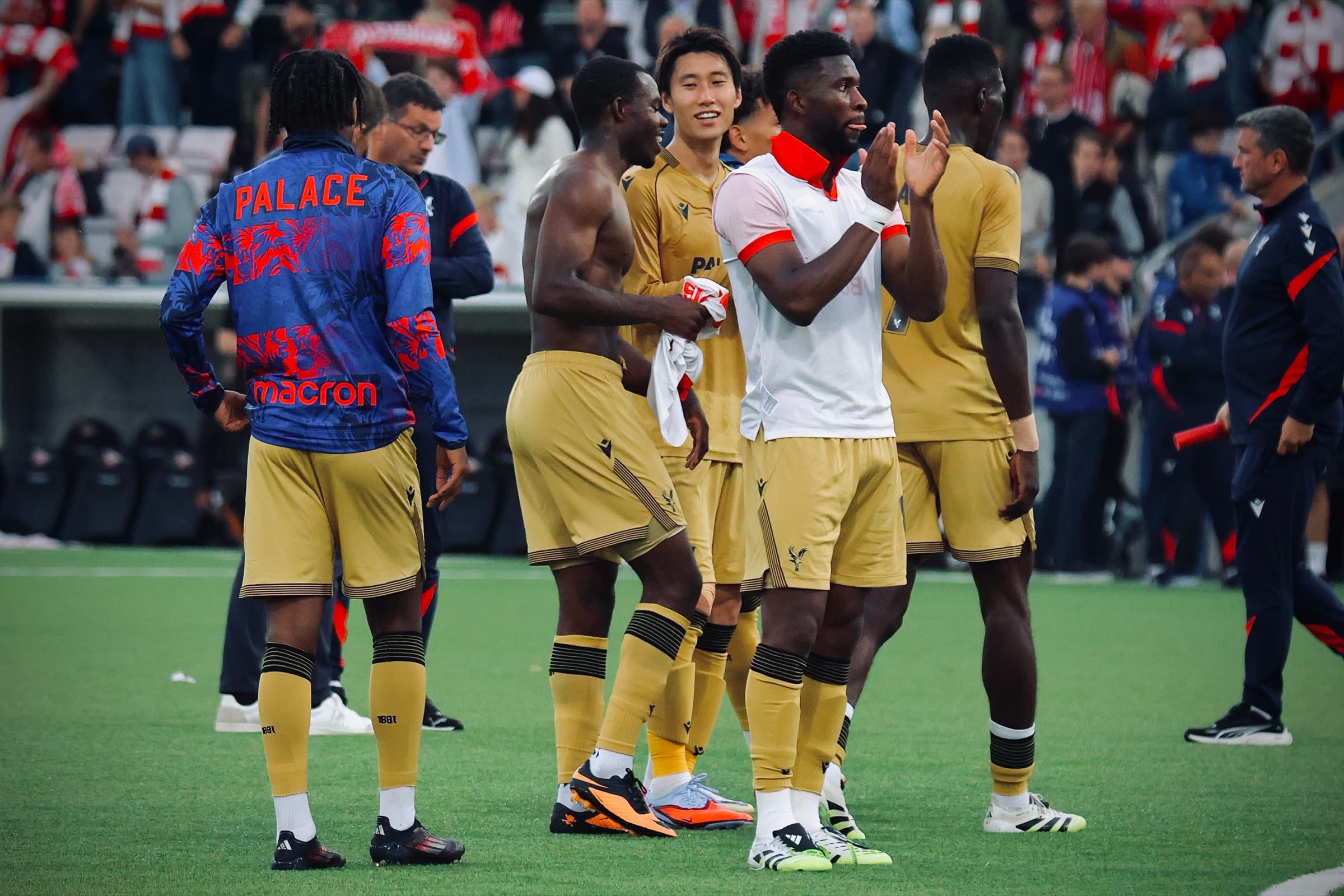

Nine English clubs are in Europe this season, and every one of them played on Tuesday, Wednesday or Thursday this week. For years I've quietly marked down anyone at a European club, the Thursday night lot especially, without ever checking whether managers actually rotate for the league game. So I went and checked.
I lined up every European match the English clubs have played since 2022/23 against the league game straight after it. Then I took the regulars - started 8 of their last 10 league appearances, played the last league game, no flag at the deadline - and compared how often they started after a European tie with how often they started in that club's normal weeks that season. Comparing each club against itself means it isn't just picking up that City rotate more than Brentford.
The average week
Regulars started 81% of league games after a European midweek and 82% in a normal week, and PPG didn't move either (3.3 against 3.2). A Premier League midweek costs about the same (81%) and an FA Cup or League Cup midweek makes no difference. I honestly expected something nearer 70%.
After a league phase game they started 85% of the time. That looks a bit better than a normal week, but most of the gap turned out to be August, when new signings push last season's regulars out of the side. Leave August out and normal weeks are 84%, so the league phase is basically level. My guess is managers do their rotating in the European game itself.
The knockouts
Once the knockouts start in February though, it's a different story:
| After a European tie… | Started | Normal week | Change | 95% range |
|---|---|---|---|---|
| Any European midweek | 81% | 82% | -1 | -4 to +2 |
| League phase / group game | 85% | 82% | +3 | 0 to +6 |
| Any knockout tie | 75% | 82% | -7 | -12 to -2 |
| …between the two legs | 74% | 82% | -8.5 | -14 to -3 |
| …in April or May | 72% | 82% | -10 | -17 to -3 |
| …club in the top four | 79% | 84% | -5 | -11 to +1 |
| …club 8th or lower | 71% | 82% | -11 | -18 to -4 |
| Europe either side of the weekend | 77% | 82% | -4 | -8 to -1 |
| For comparison, a PL midweek | 81% | 82% | -1.5 | -4.5 to +1.5 |
| For comparison, an FA Cup / League Cup midweek | 83% | 82% | +1 | -3 to +4 |
Regulars (started 8 of their last 10 league appearances, played the last league game, no flag at the deadline) at the English clubs in Europe, 2022/23 to 2026/27 GW7. Normal week is the same club's weeks that season with no midweek game either side. Change is in percentage points, compared within each club and season, with its 95% range. Normal weeks include August, when new signings push last season's regulars out - leave August out and the league phase row is +1 (-2 to +4) and the knockout rows are a point or so worse.
The league table matters more than I expected - clubs in the top four drop 5 percentage points after a knockout tie, which is within noise, and clubs 8th or lower drop 11. If the league season's already gone, the cup run gets the strongest XI and the weekend's more or less whoever's left over - Man Utd's regulars started 60% of league games after their Europa League knockout ties in 2024/25. My first thought was that's just end of season stuff, but normal weeks in April and May show no drop at all, for European clubs or anyone else, so it really is the knockout tie doing it.
Thursday to Sunday
I'd always assumed the Thursday games were the real problem and I was wrong about that. Two or three days' rest comes out at -1, four days -1, five or six days +3, so rest on its own barely moves it. Split it by stage instead and in the league phase none of the three competitions costs anything, in the knockouts the Europa League is easily the worst:
| Started after… | League phase | Knockouts |
|---|---|---|
| Champions League | 84% (+3) | 75% (-6) |
| Europa League | 84% (+2) | 73% (-11) |
| Conference League | 91% (+7) | 82% (-1) |
Share of regulars who started the league game after a league phase / group game or a knockout tie, with the change against the same club's normal weeks in brackets.
Conference League clubs started their regulars more often after a league phase game than in a normal week. Villa in 2023/24 and Chelsea in 2024/25 pretty much ran it as a squad competition. It's only 4 or 5 club-seasons though, so I wouldn't lean on it too hard.
Who gets rested
It's mostly midfielders and the expensive players. Midfielders went from 82% to 78% after Europe and players at £9m or more from 88% to 83%, while keepers, defenders and forwards didn't move. The £9m+ group is only 105 games though, and I tested a lot of splits.
Early subs go up a bit too - 4.9% of nailed starters were off before 60 mins after a European tie against 3.3% normally. That's worth a few hundredths of a point a game so it's not something I'd make a transfer over.
Managers
Some managers are much worse for it than others. Chelsea in 2022/23 dropped 19 percentage points after Europe, Man Utd 18 in 2024/25, Spurs 17 last season and Brighton 16 in 2023/24, while Villa in 2023/24 and City last season went up by 11-12. You can't really read it off the autumn though. A club's gap from August to December barely predicts its gap from January to May (a correlation of 0.2), mostly because the spring knockouts swamp everything else. Spurs last season were the exception, they rotated the whole way through.
There's no hangover in the results either. European clubs won 47% of league games after a European midweek when the bookies had them at 48%, which is the same small shortfall they have in normal weeks (48% against 49%), so there's no reason to fade the team because of it.
What it costs in points
This is the bit that changed my mind - I'd assumed fewer starts would mean fewer points and they barely move. After a knockout tie a regular averaged 3.04 points a game against 3.13 in his club's normal weeks, so about 0.1 less, and between the two legs or in April and May it's 0.16. That counts a benching as whatever he scored, which is usually nothing.
Change against the same club's normal weeks, with the 95% range. Points per game count a benching as whatever he scored (usually nothing). Normal weeks include August, which flatters the league phase by about 2 percentage points.
Regulars at the English clubs in Europe, 2022/23 to 2026/27 GW7. Compared within each club and season; ranges from resampling club-seasons.
I think a couple of things are soaking it up. A lot of the "rested" players still come off the bench for a cameo, and when they do start they score their usual. I compared each player with himself and a start after Europe is worth +0.07 points against one in a normal week, with minutes, bonus and defenders' clean sheets all about where they normally are. If tired legs are a thing I can't find them. Over a full run to the quarter finals that's well under a point for a regular, nowhere near a -4.
Captaincy comes out the same. The bookies already knock about 0.12 off a club's xG after a knockout tie and the goals then land where the odds said, so if you pick captains off the odds it's already priced in. The ten most owned mids and forwards did score 4.5 a game after knockout ties against 5.4 normally, but that's 62 games and the range runs from -2.5 to +0.4, so I'm not reading anything into it.
Why only the knockouts?
My first thought was fixture congestion, so I counted every club game in the 13 days before each league match. It didn't matter if they'd played one game or four, the regulars started within a percent or so of normal. Hold the number of games the same and a league phase week was still 4 percentage points up on starts and a knockout week 12 down, so I think managers are picking the big nights and the schedule barely comes into it.
It's mostly players they were already managing, too. A regular who'd played every minute of his last three league games started 86% of the time after a knockout tie. One who'd been subbed early or rotated lately started 70%.
Comparing whole seasons
Then I compared whole seasons instead of single weeks. Nine clubs have had seasons both in and out of Europe since 2022/23, so I compared each one with itself, every league game rather than just the ones after a European tie. Their regulars started 81% of the time in their European seasons and 87% without, seven of the nine dropped and none went up. They also had about 1.5 fewer players reach 2,500 league minutes.
Share of league games their regulars started, across the whole season. City, Arsenal and Liverpool were in Europe every season from 2022/23 to 2025/26, so there's nothing to compare them with.
- seasons without Europe
- seasons in Europe
Clubs with Premier League seasons both in and out of Europe, 2022/23 to 2025/26. A club with more than one season of a kind takes their average.
I went through it club by club because I assumed one odd season was doing it, but it reverses when they drop out. Newcastle went 92%, 88%, 91%, 74% as they went out, in, out, in, and Brighton's one Europa season sits between two at 84%. It's also why the week by week numbers above can't see it, the "normal" weeks were already inside a European season. Call it roughly two league starts per regular over a season. Once a club is knocked out its regulars drift back towards normal (their start rate goes up about 2 points), there's no big bounce to wait for.
FPL managers don't seem to trade on any of this. Ownership barely moves in European weeks once you allow for how quiet the spring is for everyone, and given the points I think that's the right call.
City, Liverpool and Arsenal
Those three have been in Europe every season since 2022/23 so they can't go on that chart, and they're where most of our money goes. So I looked inside their seasons instead, quiet weeks against the weeks after a European tie (leaving August out).
| Regulars started… | Man City | Liverpool | Arsenal |
|---|---|---|---|
| Quiet week | 80% | 85% | 89% |
| After a league phase tie | 85% | 87% | 86% |
| After a knockout tie | 72% | 74% | 84% |
Share of regulars who started. Quiet week is no European tie either side, September to May. League games after a knockout tie: City 5, Liverpool 4, Arsenal 8, so the bottom row is a handful of games.
City rotate all season rather than for Europe. Their regulars only start 80% of quiet weeks and they change about three starters a game. After a league phase tie their regulars actually played more, and for longer. The knockout drop is mostly one game - Chelsea on 21 May 2023, the day after they'd won the league - and without it they rotated as normal. Arsenal barely rotate for Europe at all, knockouts included (the same players started 88% against 90%). Liverpool look like everyone else. The City numbers are all from the previous manager's seasons though, so they may not carry over to this one.
| Player | Quiet week | After a European tie | After a knockout tie |
|---|---|---|---|
| Haaland | 94% | 91% | 4 of 6 |
| Salah | 94% | 88% | 2 of 3 |
| Van Dijk | 95% | 100% | 4 of 4 |
| Saka | 97% | 100% | 3 of 3 |
| Saliba | 94% | 94% | 7 of 8 |
| Gabriel | 92% | 97% | 6 of 6 |
| Raya | 97% | 100% | 7 of 7 |
Each club's most-owned regulars with at least eight games of each kind, 2022/23 to 2026/27 GW7.
The big names don't move. Between them they started 32 of 36 league games after a knockout tie, and two of the four misses were Haaland, one of them a 16 minute cameo in that dead rubber. At City the rotation lands on the next tier down instead - Foden and Walker actually started fewer of the quiet weeks (62% and 56%) than of the weeks after a European tie (88% and 86%).
This season
All nine clubs are coming off league phase matchday 3 this weekend, so on this evidence there's nothing to adjust for in GW8. The first week I'd watch is GW22, which sits between matchdays 7 and 8 (19-21 and 27-28 January) for all eight Champions League and Europa League clubs. Bournemouth, Palace and Sunderland are currently down for a Saturday two days after their Thursday game, although that's the provisional slot and could still move. After that it's the knockouts from February, and I'll redo this once the draws are out. Five of the nine are 12th or lower after GW7 (Villa, Man Utd, Palace, Bournemouth and Sunderland), and if any of them reach the knockouts from down there they're the 71% group.
Rules of thumb - how to use this
- Up to January (the league phase), treat players at European clubs like anyone else. Don't bench or sell a regular because his club played on Tuesday or Thursday - they started 85% of the time after league phase games, the same as a normal week.
- From February, a knockout tie takes him from about an 82% starter to 75%, but that's only worth about 0.1 points a game. Put a sub who'll actually play first on your bench and leave it there - it's not worth a hit and I wouldn't spend a free transfer on it either.
- Between the two legs of a tie, or after a quarter or semi-final in April and May, it's 74% and 72%. Same advice, just make sure whoever's first on your bench is actually starting.
- If the club is 8th or lower and still in Europe in the spring, think of its regulars as about 70% starters after every knockout tie. That's where your bench cover matters most, but I still wouldn't sell over it.
- Check his last three league games. If he's played every minute a knockout week barely touches him (86%), if he's already being managed he's nearer 70%.
- Captain him as normal. The odds already knock a bit off his team's goals after a knockout tie, and he scores his usual when he starts.
- Over a whole season it's about two league starts per regular (81% vs 87%). That's worth thinking about when you buy him, I wouldn't worry about it week to week.
- Haaland, Salah, Saka, Saliba, Gabriel, Raya and Van Dijk start about nine in ten either way, knockouts included, so I wouldn't move any of them for Europe.
- City's other regulars were about 80% starters every week under the last manager, Europe or not (that may change under the new one), and Arsenal's are about as nailed as it gets.
- GW22 is the first weekend this season with Europe either side (77%). If you've got players from the eight Champions League and Europa League clubs, make sure you've got a sub who'll play that week.
- Thursday-Sunday turnarounds on their own I'd ignore, rest days barely move it (-1 to +3). And don't fade the team, European clubs win as often as the odds say after a midweek tie.
European and domestic cup fixture dates from each club's season article on Wikipedia, checked against the FPL fixture list. Fixture-level player data (2022-23 to 2026-27) from the FPL API and the vaastav archive; match odds from football-data.co.uk.